Industry has advocated for government investment in initiatives that engage producers to access the support, technology, and incentives they need to increase production efficiency while maintaining balanced ecosystems and working within the natural carbon cycle.
Treasurer, Jim Chalmers handed down the Federal Budget on May 9 with a number of measures that will have significant implications on the grassfed beef cattle industry.
As part of a suite of announcements regarding biosecurity, the Government has introduced an increase of 10% on all commodity levies including the Cattle Transaction Levy.
While Cattle Australia welcomes the increase in sustainable longer term biosecurity funding, we do not support moves to recover partial biosecurity costs from producers without producers having a seat at the table as to how the funds are raised, administered and directed. Furthermore, we are disappointed at the substantial decline in funding for our regional, rural and remote transport networks.
While CA is pleased to see more ongoing funding allocated to Australia’s biosecurity network, it will be critical that industry plays a central role in how the new levy will be raised, managed, and directed towards industry priorities.
While biosecurity is a shared responsibility, it remains that those who create the risk, must carry the biggest share of costs.
CA welcomes the increase of fees and charges on international arrivals, international parcels and imported goods and calls on the Government to ensure the increased fees are directed to biosecurity requirements.
The existing Cattle Transaction Levy, on farm, and supply chain biosecurity management, already invests millions each year into protective measures and biosecurity. This investment is not reflected in the budget papers or the Government narrative.
CA also expects before the increase in the levy takes effect in 2024, the Government in partnership with industry, will review all biosecurity spending to ensure it is providing a return on investment.
Biosecurity Protection Levy
- The Biosecurity Protection levy on Australian producers of agricultural, forestry and fishery products will take effect from 1 July 2024.
- It will be set at a rate equivalent to 10% of the 2020–21 industry-led agricultural levies.
- It is estimated to increase receipts by $153.0 million over 3 years from 2024–25.
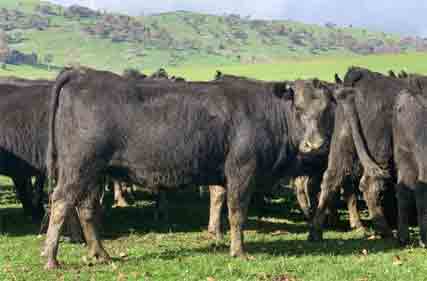
- A grassfed cattle producer will pay an extra 50 cents per head charge.
Overall Biosecurity Funding
- $845 million over four years from 2023-24, and $255 million per year ongoing from 2027-28, to maintain biosecurity policy, operational and technical functions on a sustainable basis.
- $145.2 million over three years from 2023-24 for the Simplified Targeting and Enhanced Processing System, or STEPS – a modern digital system to improve the effectiveness and efficiency of biosecurity clearance in cargo pathways.
Indigenous ranger biosecurity program
- $40.6 million over 4 years from 2023-24 and ongoing funding of $12 million per year from 2027-28 to sustainably fund the program and cement an essential partnership with First Nations people to protect our long northern coastline from biosecurity risks.
- Continuation of fee-for-service arrangements with up to 65 Aboriginal and Torres Strait Island Ranger Groups
- Delivery of biosecurity education and support materials for Indigenous Rangers, schools and northern Australian communities
- Biosecurity traineeships for First Nations people to help build biosecurity capacity across northern Australia
- Road funding
- $250 million dollars in regional road funding.
- This is in response to a budget request of $5.5 billion works identified by the agricultural sector, including $1 billion for roads to be built back better after natural disasters and $300 million a year over four years to improve local roads for freight.
- This has come at a time when significant work is needed to rebuild road networks in the north of Australia after significant flooding in several regions.
- Much of the affected infrastructure will need to be rebuilt to a higher standard to provide better assurance of a reliable road network during and after a natural disaster.
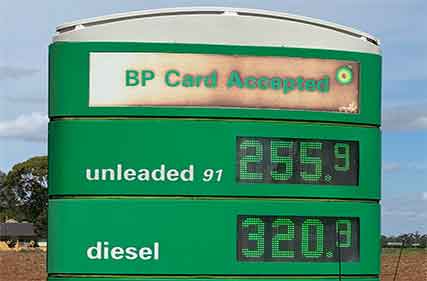
- The Heavy Vehicle Road User Charge rate will go up from 27.2 cents per litre of diesel by 6 per cent per year over 3 years from 2023–24 to 32.4 cents per litre in 2025–26.
- Small Business Energy incentive –
- Businesses with annual turnover of less than $50 million will have access to a bonus 20 per cent tax deduction for eligible assets supporting electrification and more efficient use of energy, from 1 July 2023 until 30 June 2024. Up to $100,000 of total expenditure will be eligible for the incentive, with the maximum bonus tax deduction being $20,000 per business.
- The instant asset write-off threshold will be temporarily increased to $20,000 from 1 July for a year. This means small businesses with an annual turnover less than $10m will be able to instantly deduct the entire cost of certain assets that cost less than $20,000, which are first used between 1 July 2023 and 30 June 2024. The $20,000 threshold applies to each asset, so small businesses can take advantage of this measure to buy multiple assets.
-
- $450.3 million over 4 years from 2023–24 (and a further $149.7 million over 3 years from 2027–28) to establish the Safeguard Transformation Stream to support decarbonisation investments at trade-exposed industrial facilities covered by the Safeguard Mechanism
- $200 million climate and infrastructure partnership with Indonesia
Accelerating adoption of climate-smart, sustainable agriculture
- $158.6 million will be delivered through projects that:
- Support the agriculture sector to transition to a low emissions future and foster sustainable agriculture, including climate adaptation practices and emissions reductions technologies, and tools and extension services that support greater engagement in carbon and biodiversity markets.
- Trial, undertake on-farm demonstrations and implement practices that address local and regional natural resource management priorities and deliver long term sustainable agriculture outcomes.
- Industry has advocated for government investment in initiatives that engage producers to access the support, technology, and incentives they need to increase production efficiency while maintaining balanced ecosystems and working within the natural carbon cycle.
- Ongoing funding in this area is welcomed and will help support the beef industry to contribute towards the goal of the Australian red meat industry to be carbon neutral by 2030.
Soils
- $36 million will be invested to design and deliver a new National Soil Monitoring Program to monitor soils nationally. Data collected will be consistent and made publicly available on the Australian National Soil Information System, which will also be improved as part of this funding.
- The data will support stakeholders to make evidence-based decisions to improve soil health at a range of scales.
- Support for the Regional Soil Coordinators program and the National Soil Community of Practice, which will facilitate soil extension services and promote soil knowledge sharing and innovation for more effective and sustainable land management practices.
- $20 million in 2023-24 for projects to address the priorities of the National Soil Action Plan and the National Soil Strategy. The measures will assist farmers and a range of soil-related stakeholders to better understand and respond to soil challenges and opportunities to improve overall soil trends.
- The industry has advocated for help from government to fill the gap that exists in availability of national soil health data, and this funding is welcomed. We recognise soil health as an important indicator of industry sustainability and access to this data will help us monitor our soil health profile and support best management practices on the ground.
Other sustainability capabilities
- $38.3 million over 4 years will strengthen the work of the Department and ABARES
- $16.1 million to improve regional data sources. This data guides government and industry climate decisions, biosecurity planning and natural disaster management.
- $9.4 million to collect information on the adoption of low emissions technologies and practices by farmers and develop better ways to make data and analysis collected by ABARES more accessible.
- $12.8 million to examine the effect of domestic and international emissions policies on Australian agriculture and regions, providing information to farmers that will help them make decisions about growing the future value of their businesses.
- Industry welcomes this funding in anticipation of it boosting our access to reliable, national data to track progress, monitor outcomes and better manage risks particularly in relation to sustainability, biosecurity, and natural disaster preparedness.